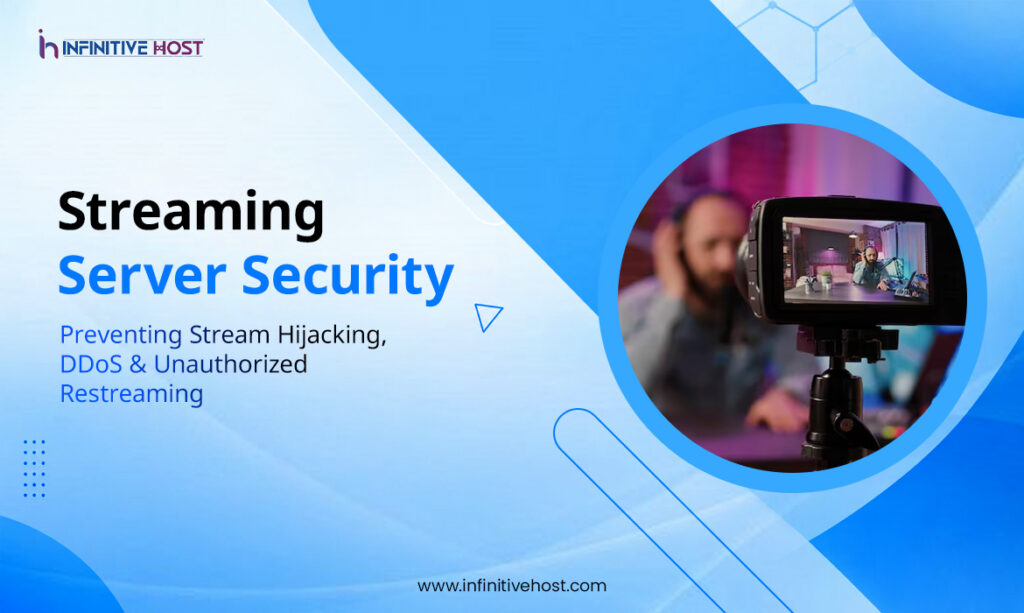
A live broadcast going down mid-stream isn’t just embarrassing — it’s often the moment viewers leave and never come back. Streaming server security exists to prevent exactly that, covering everything from stream hijacking attempts to DDoS attacks aimed at knocking a broadcast offline right when it matters most.
This post breaks down the real threats behind streaming server security, what actually protects a broadcast, and where infrastructure choices — including server location — make a measurable difference.
Why Streaming Server Security Matters More Than Ever
Live streaming has moved well past niche hobbyist territory into serious commercial territory — sports broadcasts, corporate events, paid subscription content, and everything in between. That growth has made streaming infrastructure a genuine target, since a successful attack during a high-value broadcast can mean real financial loss, not just a temporary inconvenience.
Streaming server security has to account for several distinct threats at once: someone hijacking a stream to insert unauthorized content, a DDoS attack overwhelming server resources, and unauthorized restreaming that quietly siphons off viewers and ad revenue without anyone noticing right away.
Understanding Stream Hijacking
Stream hijacking happens when an unauthorized party gains access to a stream’s feed, either intercepting it in transit or exploiting weak authentication to inject their own content into a legitimate broadcast. This can range from embarrassing to genuinely damaging, depending on what gets inserted and who’s watching when it happens.
Strong authentication on stream keys, encrypted transmission protocols, and regular key rotation all reduce the odds of hijacking significantly. Streaming server security that ignores these basics leaves an obvious door open for exactly this kind of attack.
DDoS Attacks Against Streaming Infrastructure
Distributed denial-of-service attacks flood a server with overwhelming traffic, aiming to knock it offline or degrade performance to the point of being unusable. For streaming, a DDoS attack at the time of a major live event can cause maximum a lot of damage, since there’s often no way to reschedule a live broadcast once it’s already underway.
Solid streaming server security includes traffic filtering, rate limiting, and dedicated DDoS mitigation that absorbs and filters malicious traffic before it ever reaches the actual streaming infrastructure.
Protect Your Broadcasts With a Secure Dedicated Streaming Server
Shared hosting environments introduce risk that dedicated infrastructure simply avoids. When you protect your broadcasts with a secure dedicated streaming server, you’re not sharing resources — or vulnerabilities — with any other tenant whose security practices you have no control over.
The advantage of having an environment that is dedicated is that one can have a specific security configuration designed to meet the needs of streaming applications and not just a general security configuration suitable for any other website or application.
Keep VOD Content Secure With Live Streaming and VOD
Live broadcasts aren’t the only thing needing proper security. Brands that keep VOD content secure with live streaming and VOD platforms are protecting against a different but equally harmful threat: unauthorized downloading, redistribution, or restreaming of recorded content after the original broadcast has ended.
Token-based access controls, encrypted delivery, and watermarking all help protect stored video assets from walking out the door and showing up on unauthorized platforms elsewhere.
Choosing the Right Server Location for Security and Performance
Where a streaming server physically sits affects both latency for viewers and how quickly DDoS mitigation systems can respond to an attack in progress. Here’s how a few key locations stack up:
- Key Strength: High-capacity East Coast connectivity
- Best Suited For: US East Coast audiences, low-latency delivery
- Key Strength: Strong West Coast and Pacific connectivity
- Best Suited For: US West Coast and cross-Pacific audiences
- Key Strength: EU-aligned data handling and connectivity
- Best Suited For: European viewers needing regional compliance
- Key Strength: Canadian data residency and connectivity
- Best Suited For: Canadian audiences with local compliance needs
Picking the right location isn’t just about latency — it directly affects how streaming server security performs during an actual attack, since closer mitigation infrastructure generally responds faster than a distant one.
A Special Offer Worth Knowing About
Right now, there’s a special offer streaming server 25% discount available for businesses looking to upgrade their broadcast infrastructure without waiting for budget approval next quarter. It’s a reasonable moment to actually invest in proper streaming server security rather than continuing to run on infrastructure that’s never been stress-tested against a real attack.
Preventing Unauthorized Restreaming
Unauthorized restreaming — someone capturing and rebroadcasting your content on their own platform — quietly drains revenue and audience without triggering the obvious alarms a hijacking or DDoS attack would. Watermarking streams, monitoring for unauthorized redistribution, and enforcing strict access tokens all help close this gap.
Streaming server security built with restreaming prevention in mind treats this as seriously as more dramatic threats, since the financial damage from ongoing unauthorized redistribution can exceed the cost of a single disruptive attack over time.
How Infinitive Host Supports Streaming Server Security
Infinitive Host provides dedicated streaming infrastructure built around these exact threats, combining DDoS mitigation, secure authentication, and location-specific deployment options so broadcasters aren’t left assembling their own patchwork of security tools.
For businesses serious about protecting live and on-demand content alike, that kind of purpose-built approach to streaming server security removes a lot of the guesswork around whether infrastructure will actually hold up when it’s tested for real.
Conclusion
Streaming server security isn’t a single feature you bolt on after launch — it’s authentication, DDoS mitigation, location strategy, and ongoing monitoring all working together before a real attack ever tests the setup. From stream hijacking to unauthorized restreaming, the threats facing live and on-demand content are real and growing alongside the industry itself. Investing in proper streaming server security, whether through Infinitive Host or another provider that takes the threat seriously, is what separates a broadcast that survives a bad moment from one that doesn’t come back online in time to matter.